
The Return of the Curve: Bean Sofas, Arches and the End of the Hard Edge
For readers assessing curved Italian furniture, the practical question is how the idea performs in a real room, not only how it photographs. The 64th Salone del Mobile.Milano ran at Rho Fiera from 21 to 26 April 2026 and closed with 316,342 visitors from 167 countries. The floor answered the year’s materiality theme with roundness: enveloping sectionals, kidney-shaped seats, arched niches, tables with no straight line. The design press reported the same softening out of Milan. A curve is not a styling decision, though. It is a manufacturing decision, and the workshop pays for it.
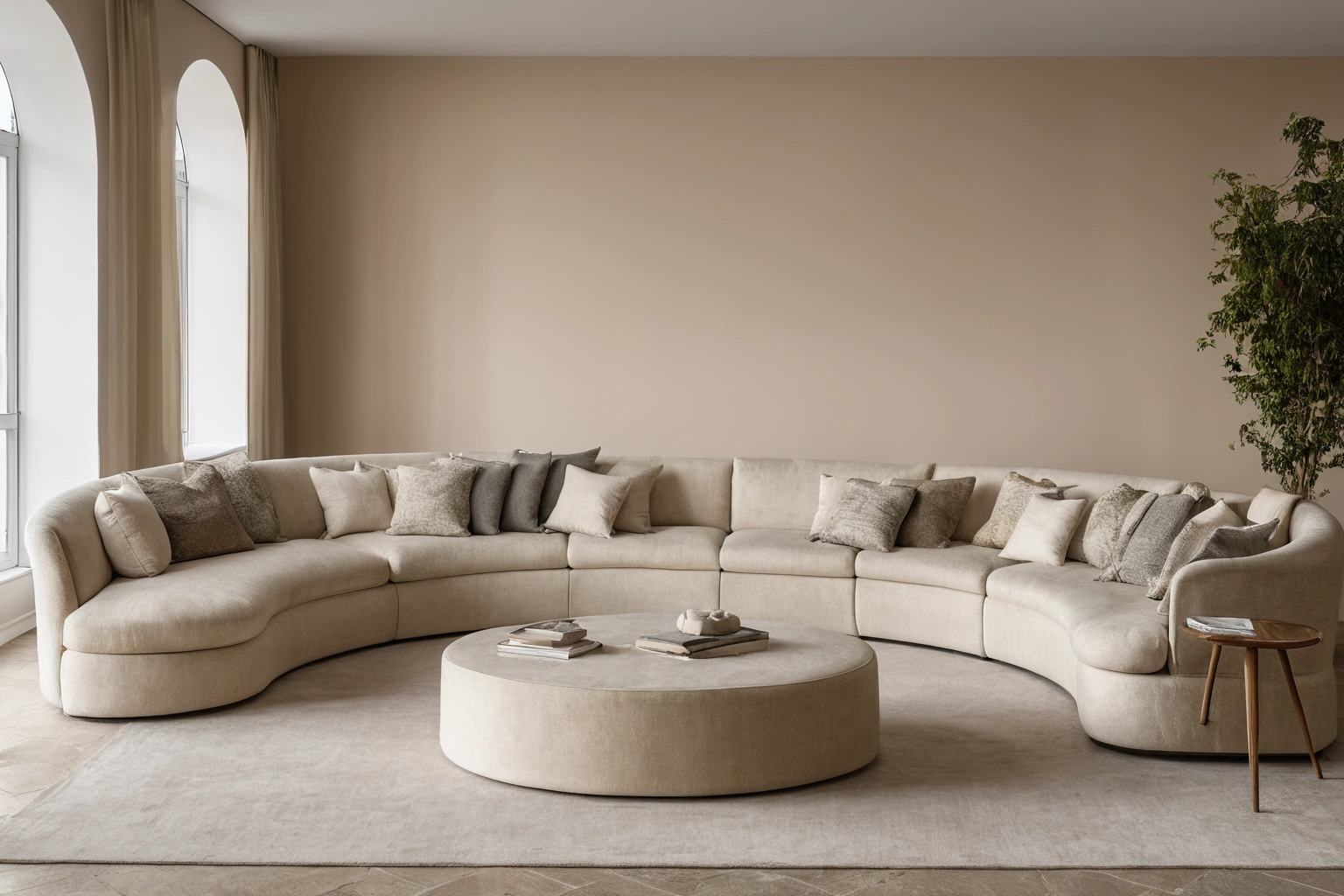
The curve keeps coming back
The most produced chair in history is a curve. Thonet’s No. 14 launched in 1859: six pieces of steam-bent beech, ten screws, two nuts, thirty-six of them flat-packed into a one-cubic-metre crate. Between 1859 and 1930 the firm sold some 50 million. The V&A’s account of Thonet and bentwood makes the point that matters: bending was the industrial argument, not the decorative one, making a chair strong with less timber and fewer joints. The No. 14 was cheap because it was curved.
Then the argument changed. Eero Saarinen’s Miller House in Columbus, Indiana, occupied in 1957, sank a seating well into the floor; that conversation pit is credited to its interior designer, Alexander Girard. In 1970 Mario Bellini drew the Camaleonda for B&B Italia, foam blocks hooked with rings and tie-rods, dropped in 1979, reissued in 2020. So the end of the hard edge gets announced about once a generation, and it keeps not ending. The mechanics underneath have not moved.
Why wood resists the curve
Raise a board’s core to between 88 and 100 degrees in saturated steam and the lignin binding its fibres softens enough for the cellulose bundles to slide. The board turns briefly plastic. Then the asymmetry that governs the craft: softened wood compresses a long way without failing, and stretches almost not at all. Bend a steamed blank freely and the outer face tears first. A related practical reference is available in Majlis Design in Dubai Villas.
So the bender cheats. A steel strap with end stops is clamped along the outside of the blank, holding its length constant, so the outer fibres cannot stretch and the bend is forced onto the compression side, where wood is strong. Release it and it springs back, so the form is cut past the target.
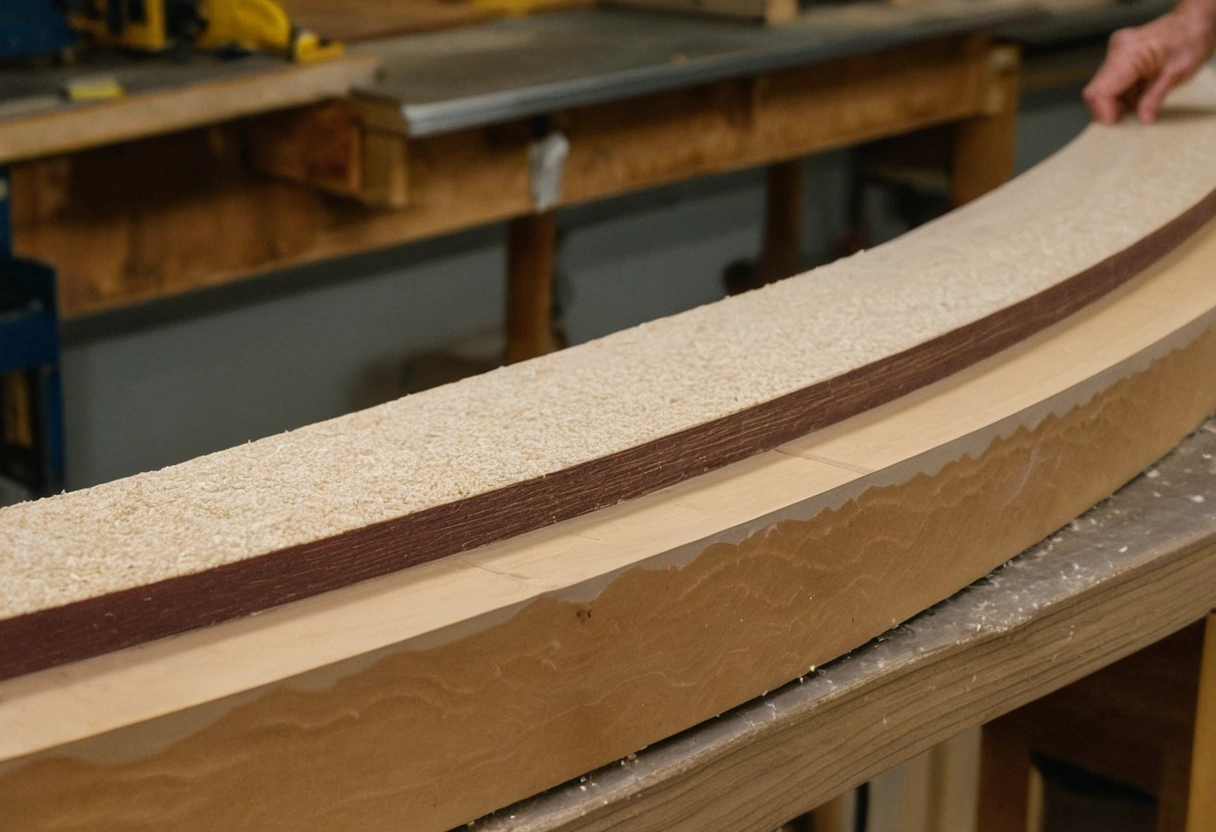
Lamination removes the problem instead of fighting it. Charles and Ray Eames pushed it furthest, in a spare bedroom of their apartment, with a plaster mould and a membrane inflated by a bicycle pump, a rig Ray named the Kazam machine. The ambition, from a 1940 competition entry with Eero Saarinen onward, was seat and back in one continuous curve. The plywood cracked where one became the other, so they stopped asking: two moulded panels, joined by rubber shock mounts. The LCW, in production from 1946, is a landmark of moulded plywood whose defining feature is also a scar: the join is there because the curve won. The wider project context is available from TaskiApp Interior Design.
| Method | How the shape is made | What limits it | Typical use |
|---|---|---|---|
| Steam bending | Steamed solid wood forced round a form against a strap | Outer face tears if stretched; radius limited by species | Chair backs, hoops, arms |
| Laminated bending | Veneers glued in a stack, clamped in a mould until cured | Springback; every shape needs its own mould | Shells, seat pans, curved rails |
| CNC ribs and skin | Profiled ribs cut, then covered with a flexible skin | Machine time and waste; the skin bends only one way | Sofa frames, arches, joinery |
| Carved foam over a frame | Shape sculpted in foam, stabilised by the structure beneath | Foam relaxes; only as good as the cover pattern | Bean and organic upholstery |
The part nobody photographs
Upholstery is where the curve becomes a mathematics problem, and mathematics does not negotiate. In 1827 Carl Friedrich Gauss proved a result he liked well enough to call the Theorema Egregium, the remarkable theorem: the Gaussian curvature of a surface does not change when you bend it without stretching.
A flat sheet has Gaussian curvature of zero. Roll it into a cylinder, still zero; bend it into a cone, still zero. A sphere curves positively everywhere, which is why a flat panel of anything, paper, leather or linen, cannot be laid over one without stretching, gathering or tearing. The same theorem is why no flat map of the earth can be accurate. Further related coverage is collected in Blog.
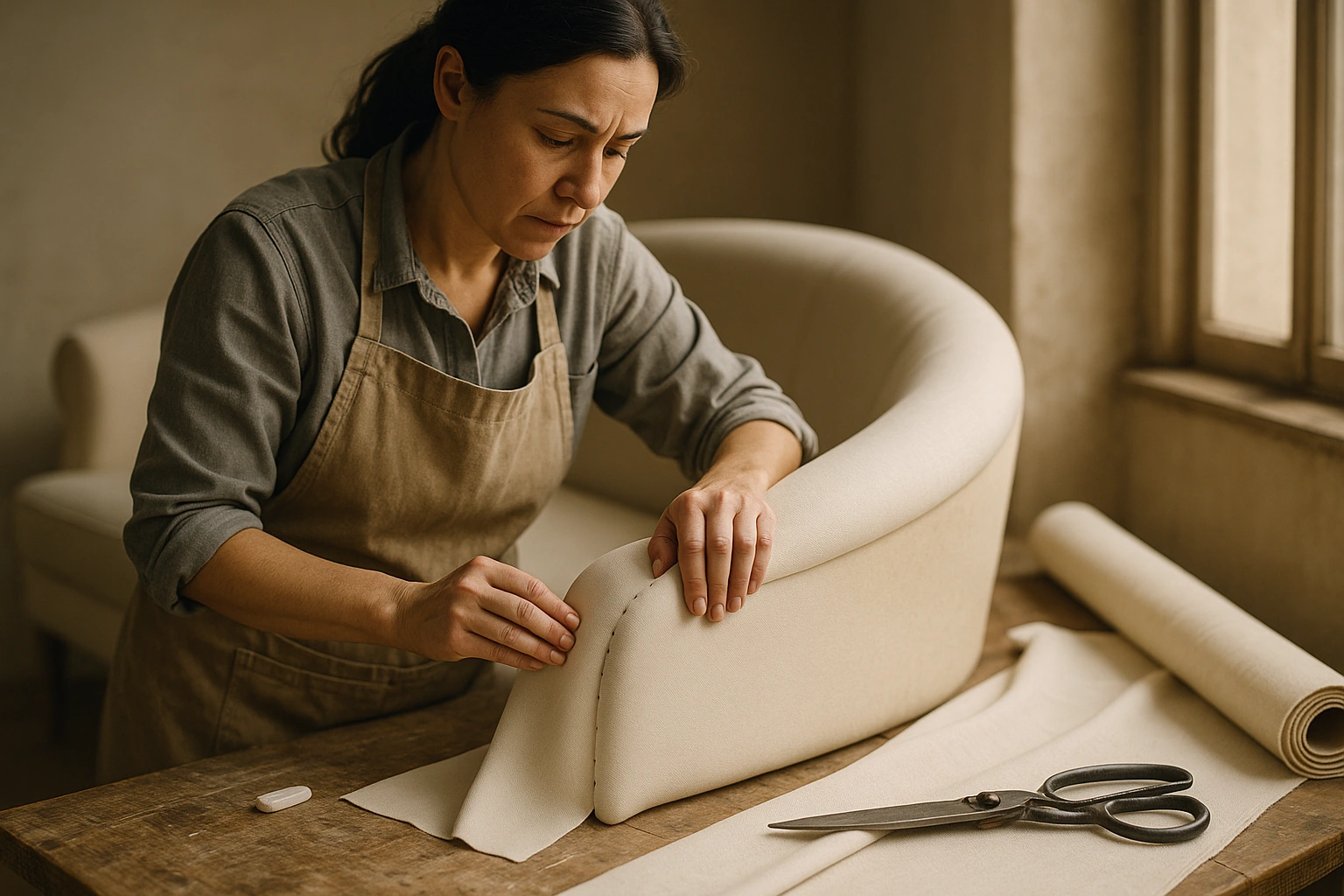
Every piece with a genuine compound curve, a shoulder or a bean, hits that wall, and the ways out all cost: seam the surface into panels small enough to behave, take darts, stretch the cloth, or gather it. A straight-sided sofa can be covered in a handful of flat panels. A bean sofa needs a pattern maker.
A straight sofa gets covered. A curved sofa gets patterned, and the pattern is most of what you are paying for.
- Compound curve
- A surface bending in two directions at once. The reason a cover needs seams or darts rather than one panel.
- Developable surface
- A curved surface that unrolls flat without distortion. Cylinders and cones qualify; spheres and beans do not.
- Dart
- A wedge of fabric cut out and stitched closed so flat cloth can follow a shape curving away.
- Springback
- The few degrees a bent component relaxes once the clamp comes off.
Does a curve actually sit better?
Partly, and the answer has a second half. A curved seat spreads contact pressure instead of concentrating it on a front rail under the thigh. Seating set on a curve puts people in each other’s sight line at equal distance, which two straight sofas at right angles never manage. That was the argument of the 1957 pit. The case against is mostly about fit. For the next stage of the brief, see About Us.
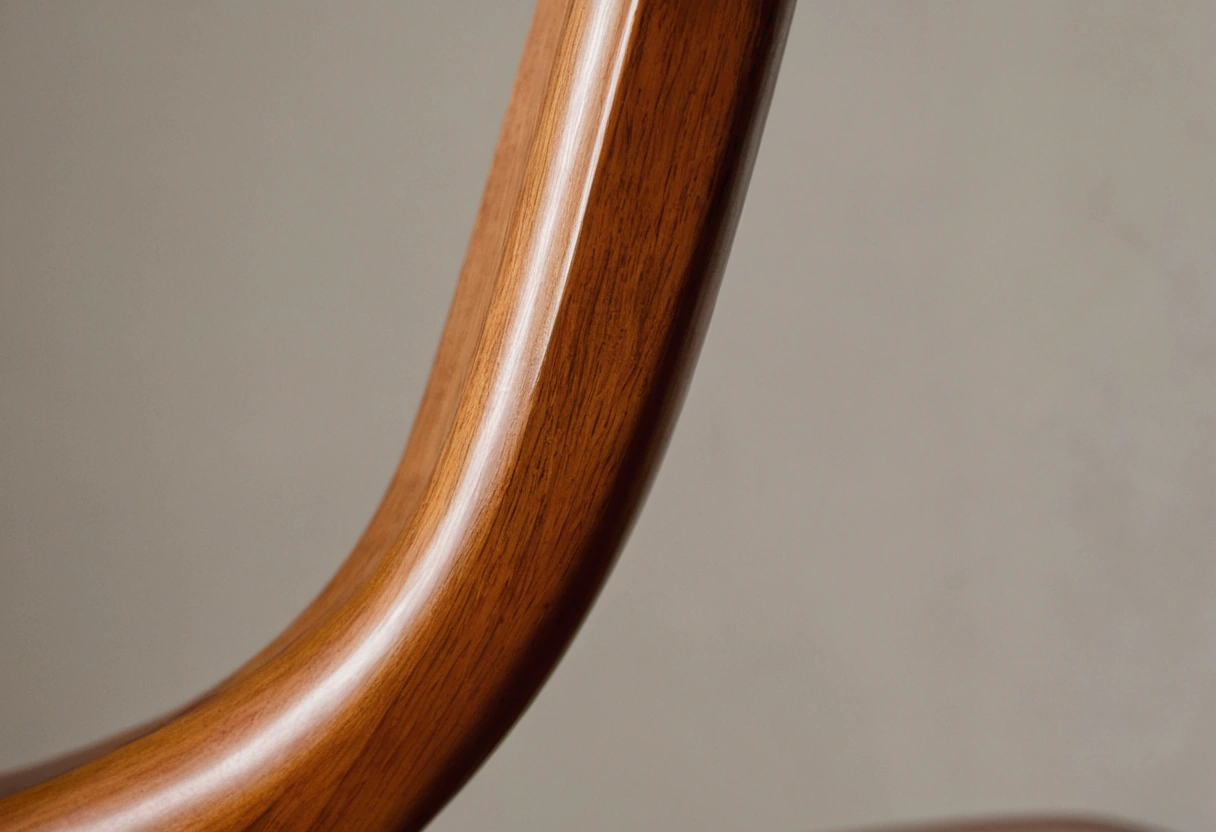
- A moulded curve is a fixed radius and bodies are not. A shell that fits one adult presses wrong on someone taller.
- Deep, low, soft seating gives little defined lumbar support and less to push against when standing.
- Curved sofas do not sit against walls. They need floor around them, and photograph better in a fair stand than in a room.
- Arched joinery loses volume at the top of every cupboard, and curved doors cannot be rehung as flat ones can.
How to judge a curve before you buy it
The questions that separate a shaped piece from a shape-shaped one are unglamorous. A workshop building curved Italian furniture to order should answer them without reaching for a brochure.
- Ask how the curve is made. Steam-bent solid, laminated veneer, CNC ribs under a skin, or carved foam.
- Look at where the seams fall. On a compound curve the seam lines are the design. If they bunch at the tightest radius, the pattern was rushed.
- Check the tightest radius. That is where plywood cracks, foam creases and covers pull, and where a cheap curve shows itself.
- Ask what happens in ten years. Can it be re-covered, and does the maker keep the patterns? They separate a repair from a write-off.
- Measure the floor, not the sofa. A curved sectional consumes the space around it.
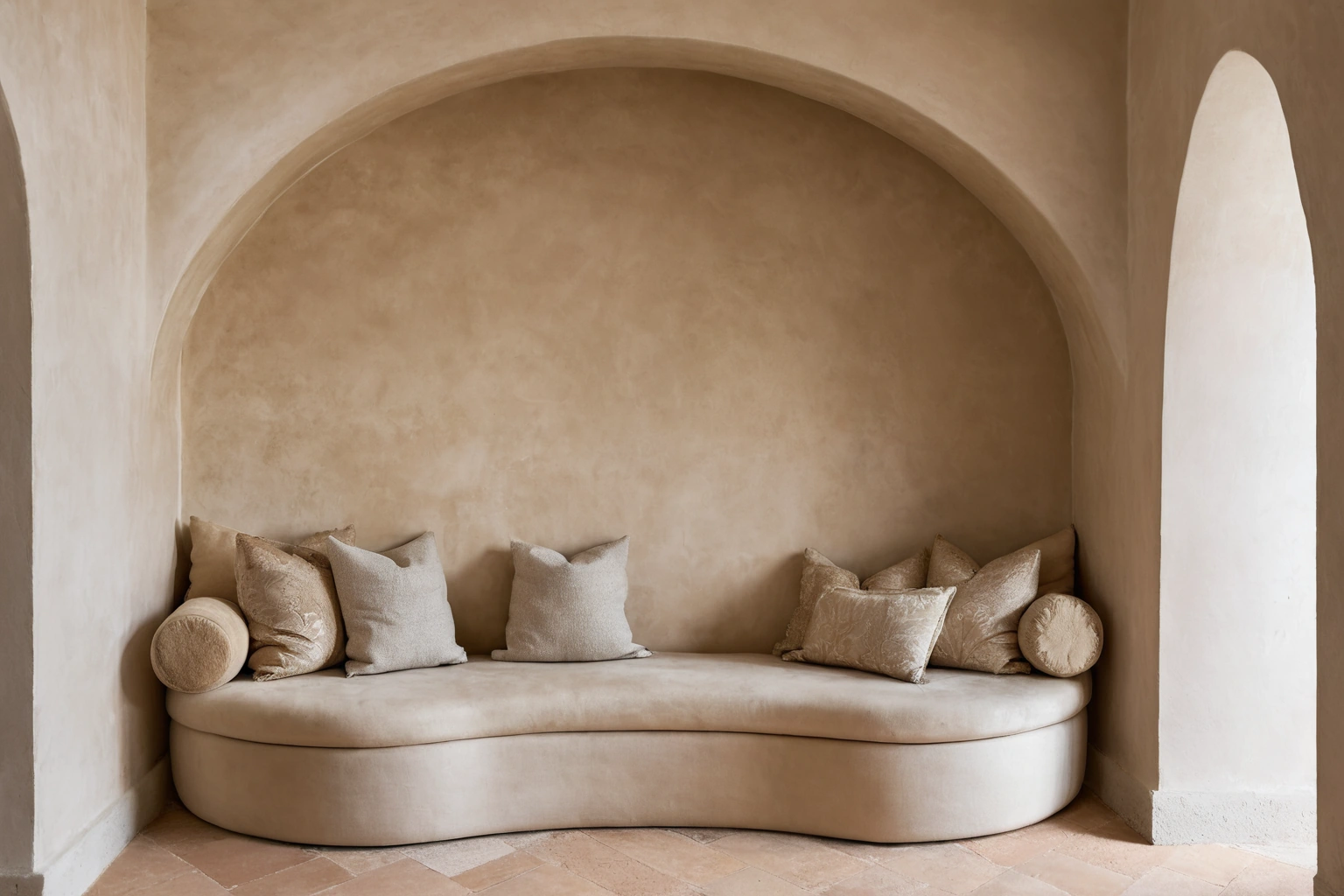
The hard edge is not ending. Milan filled its halls with curves in April and will fill them with edges again. What does not change is what a curve costs to make honestly: a mould that exists for one shape, a bender who knows wood will crush but not stretch, and a pattern maker who knows Gauss was right. On a curve you are paying for the part you cannot see.